
01
existing players
Some organisations are already working with biomaterials, including mycelium, pasta starch and lobster shells.









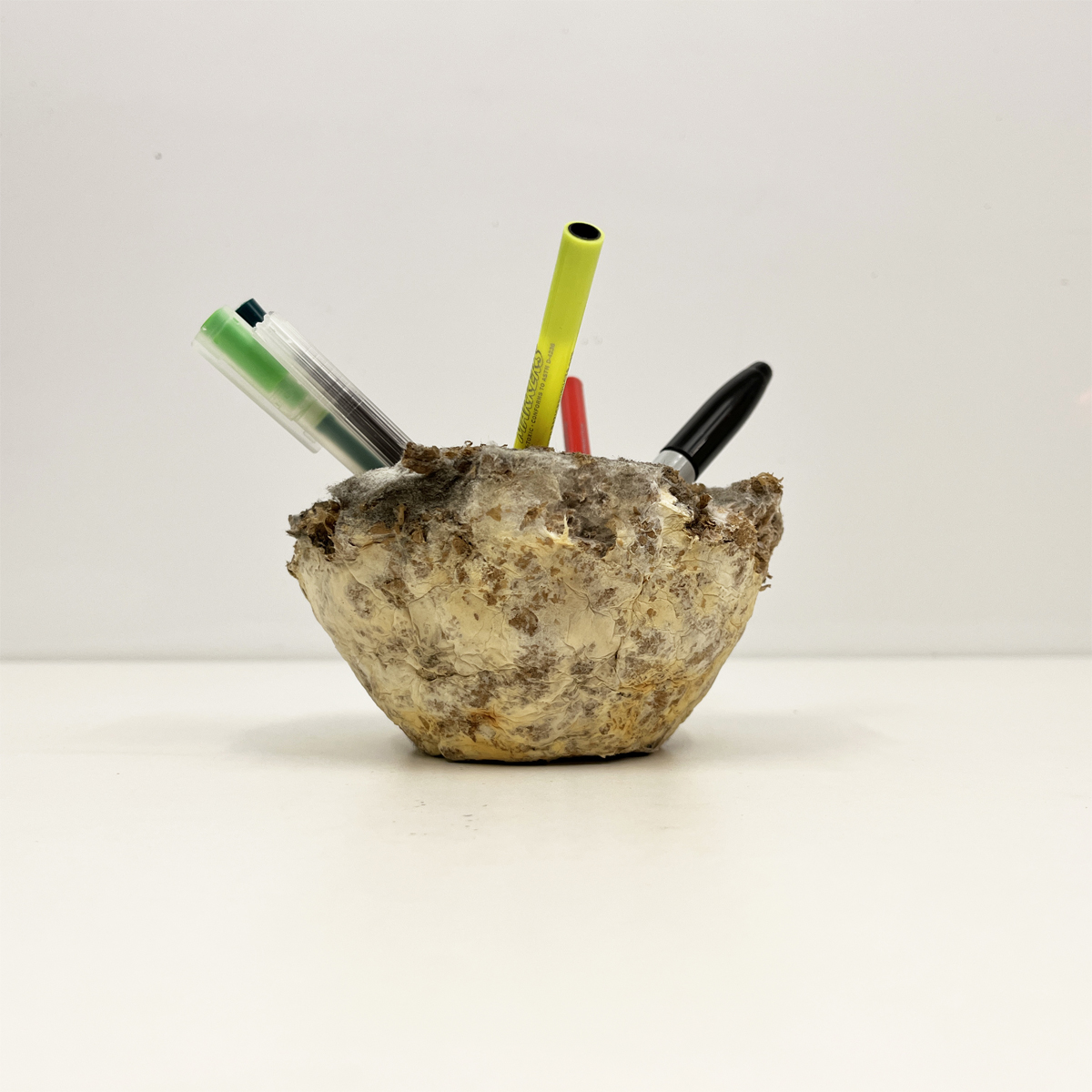
An interspecies design process that treats mycelium as a collaborator: choosing strains, preparing agricultural substrate, and growing simple containers instead of moulding them.
Some organisations are already working with biomaterials, including mycelium, pasta starch and lobster shells.
Existing players already make simple products from biomaterials. These are the plastic categories where a bio alternative could be practical, and where this project starts.
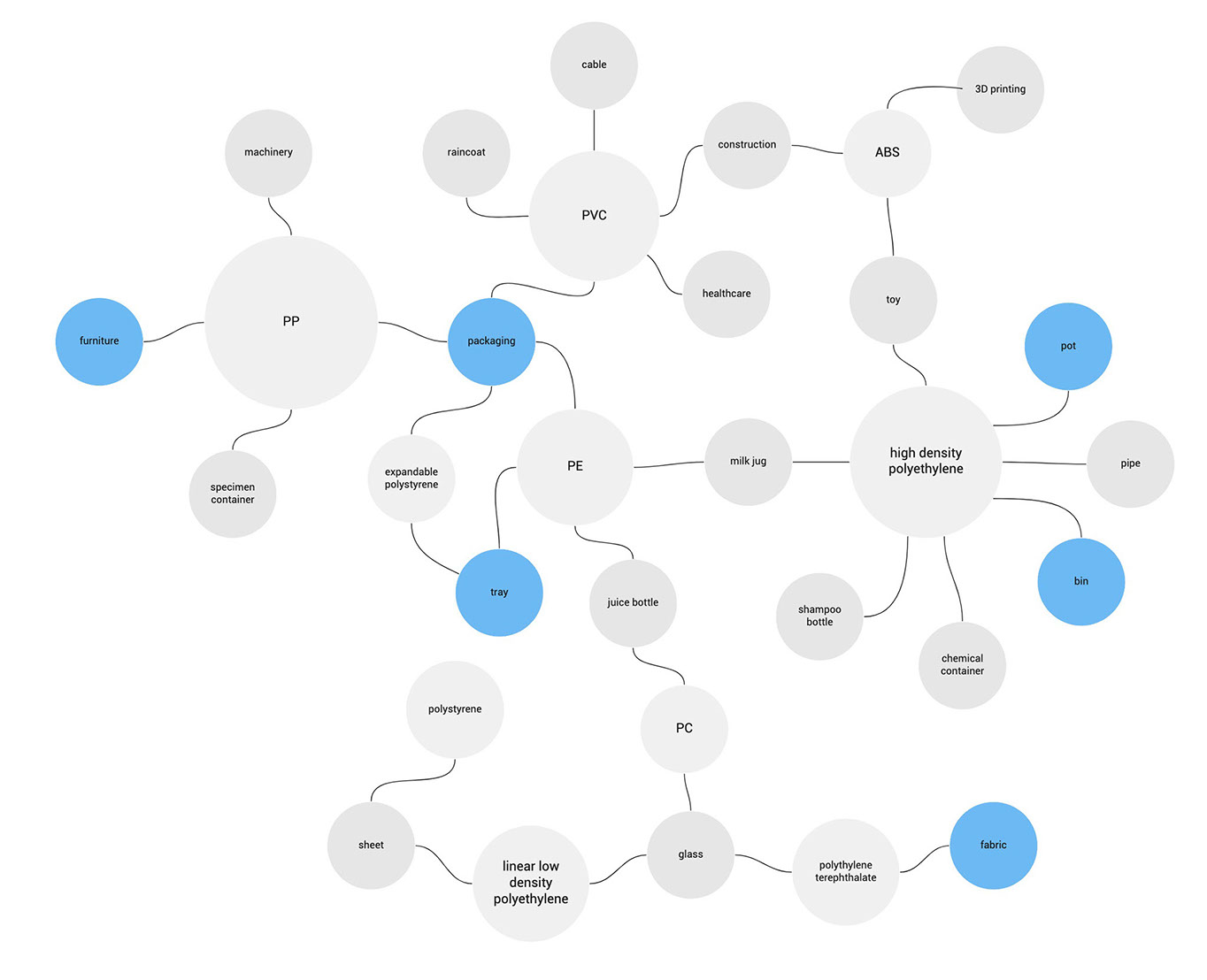
Knowing the goals of plastic replacement, the next step is to co-design with mycelium. Starting from what is possible today, the work begins with the easy segments: simple containers, trays and textile.
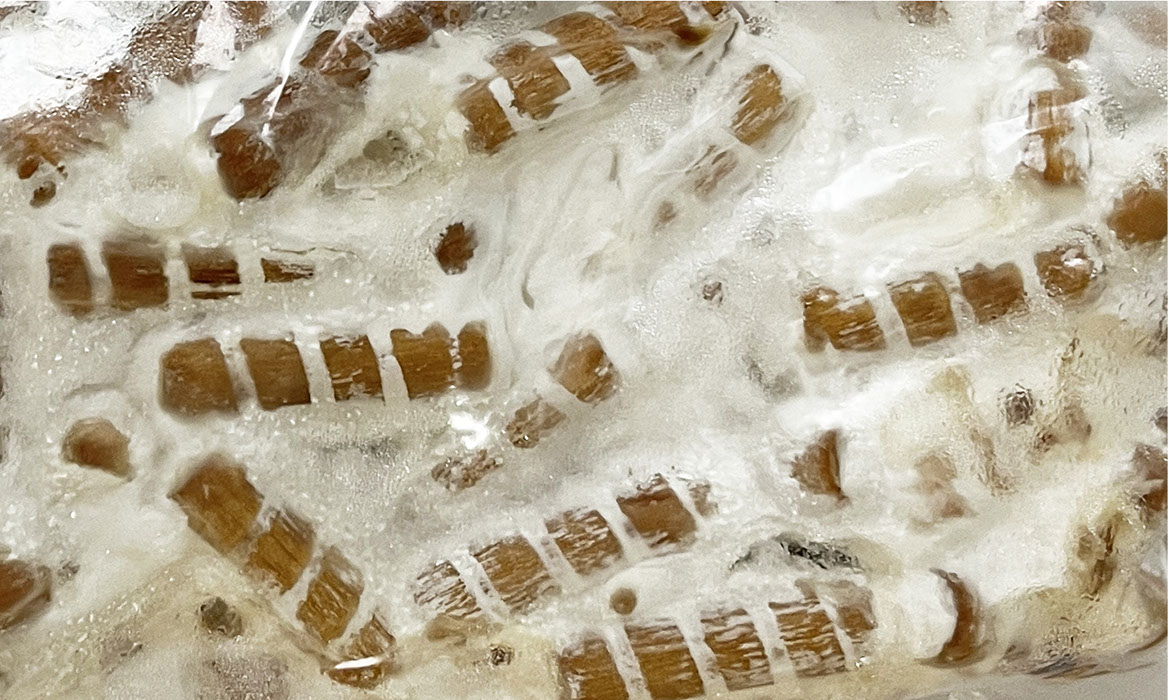
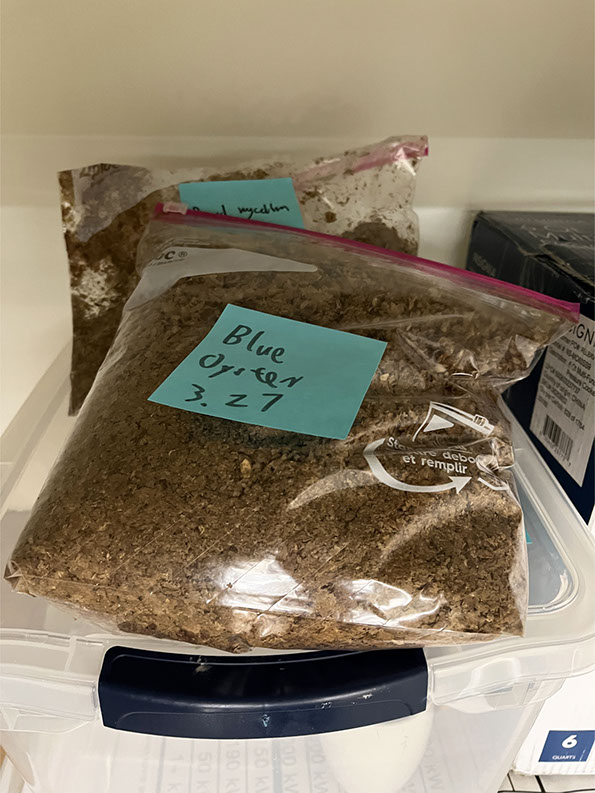
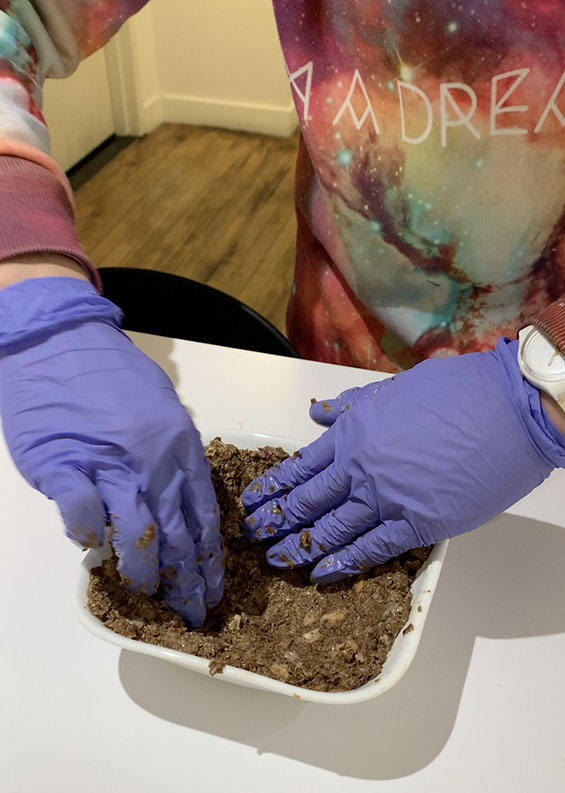
Co-design sketches and early form studies with mycelium.
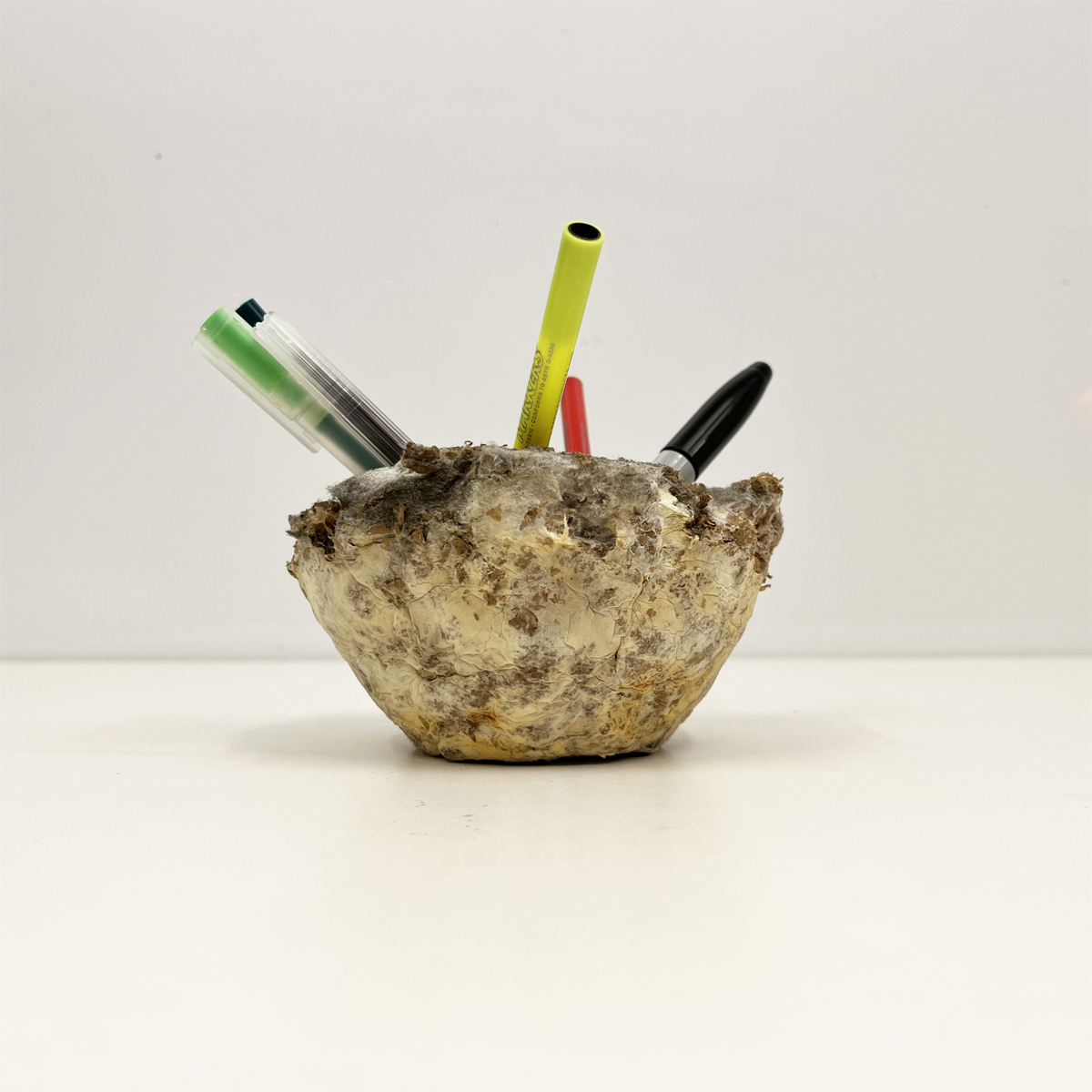
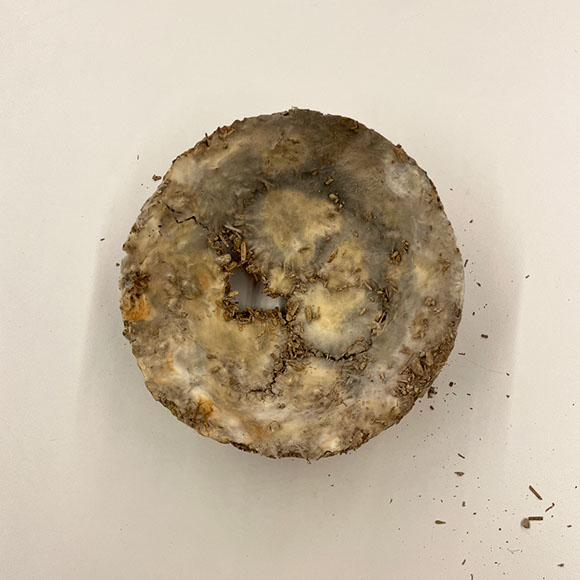
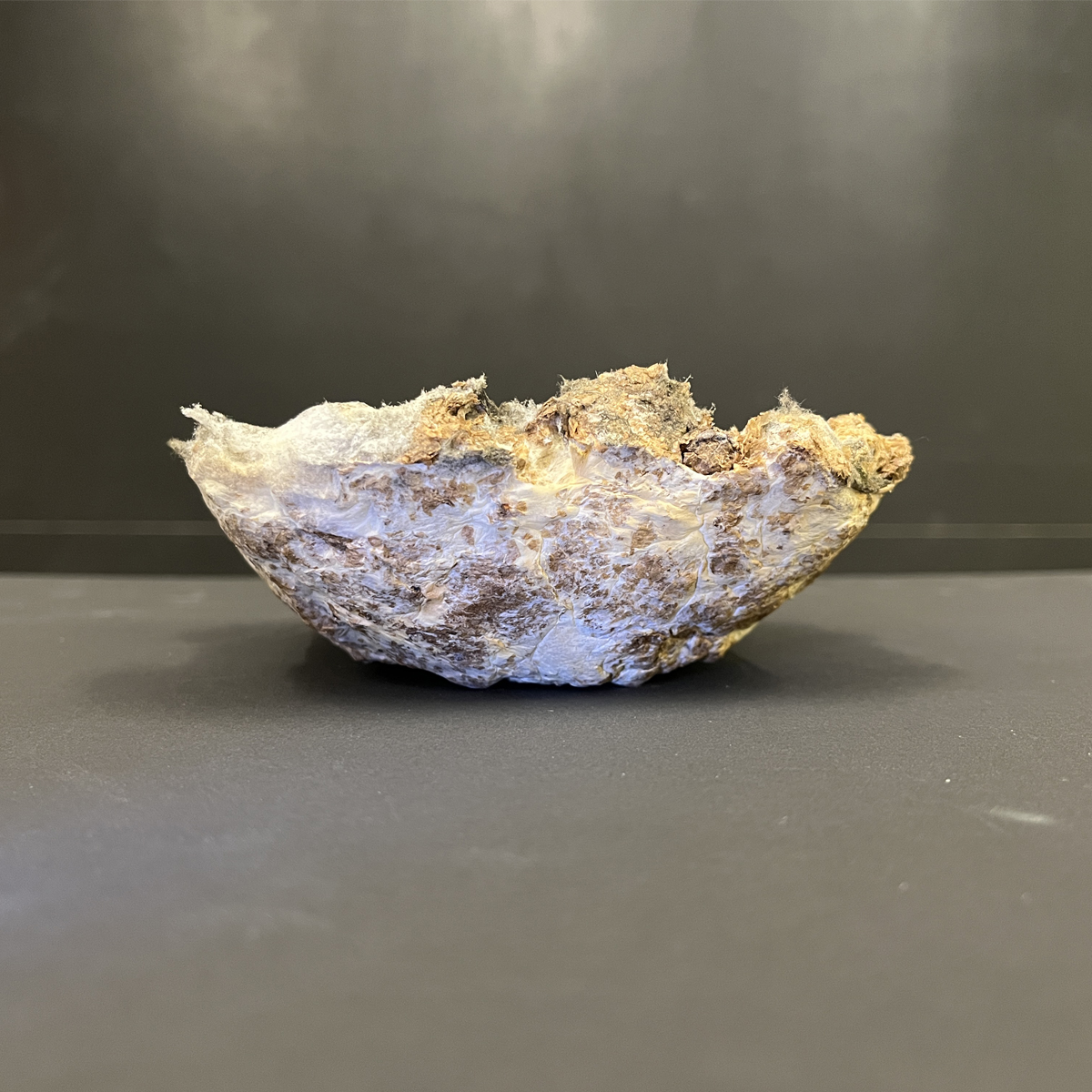
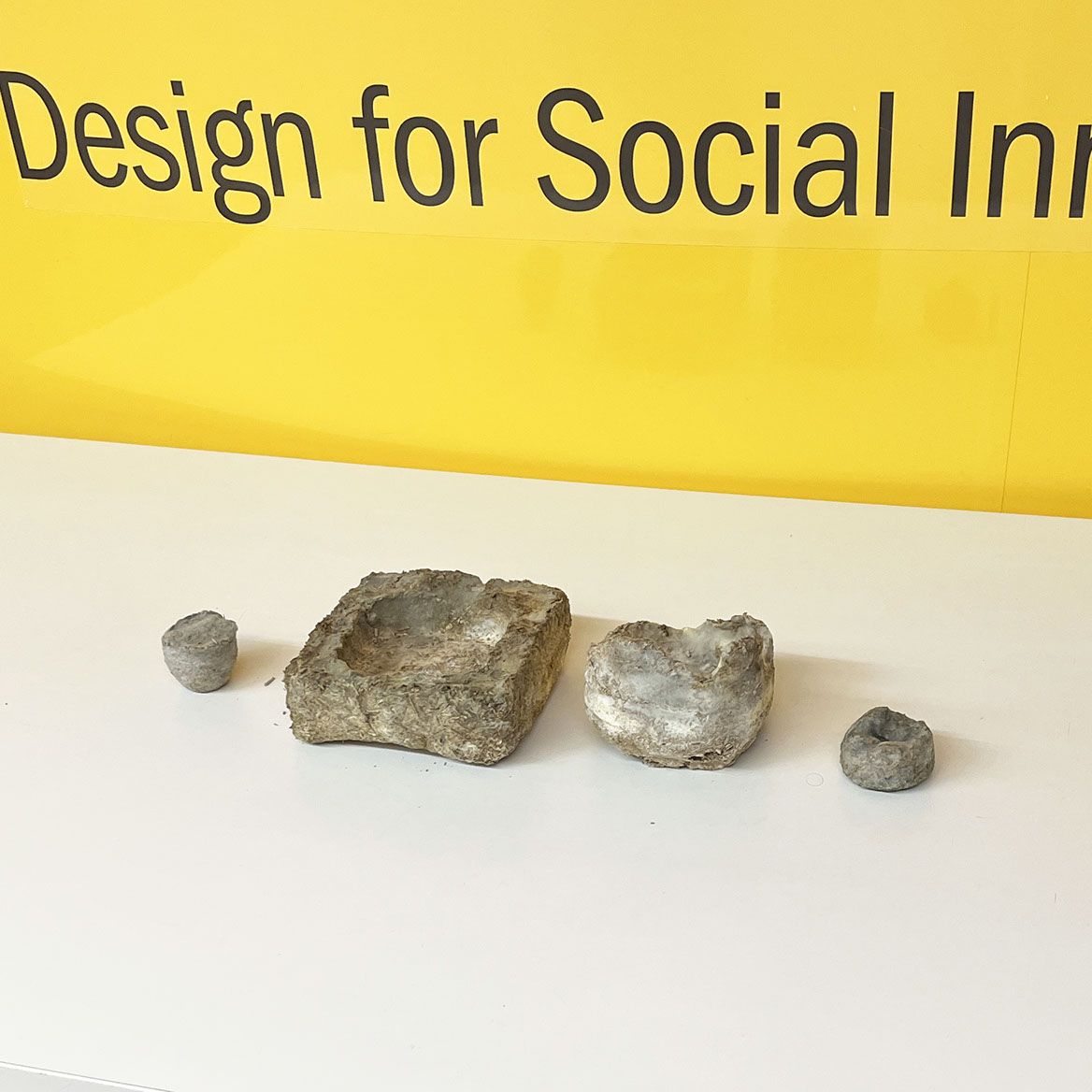
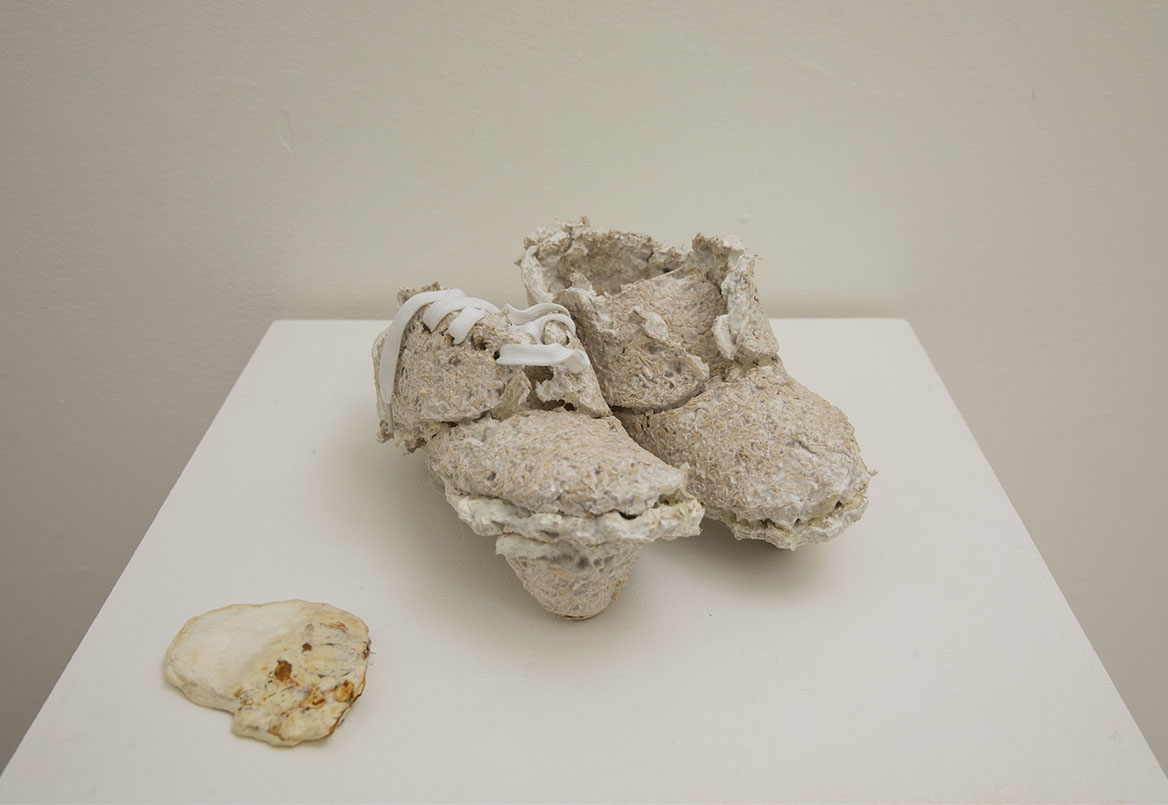
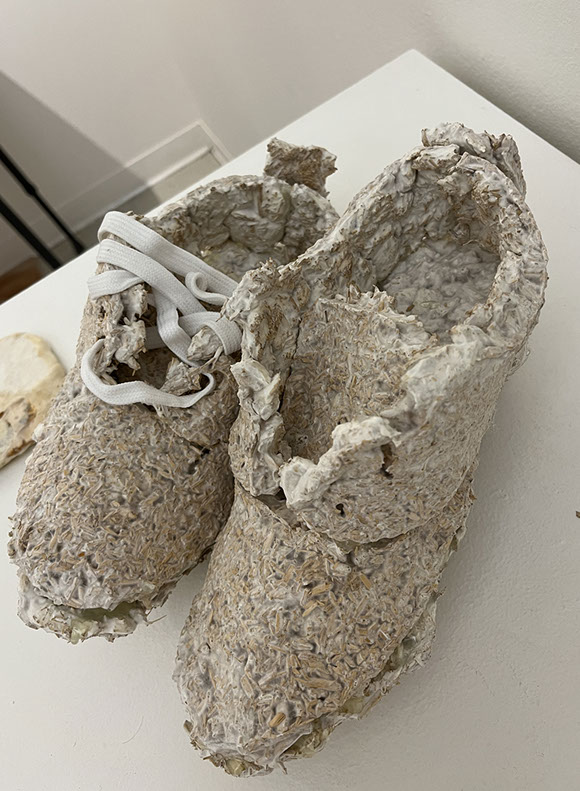
Prototypes from the growing trials, dried to stop growth and fix their shape.
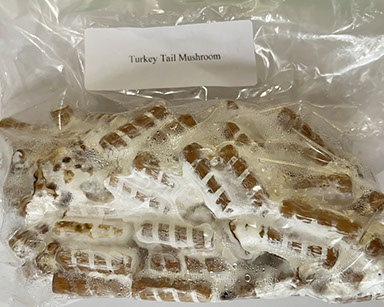
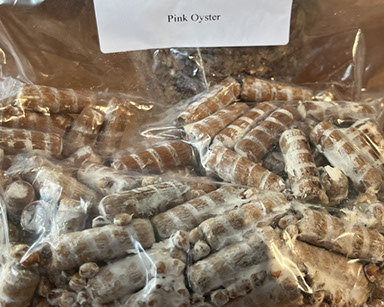
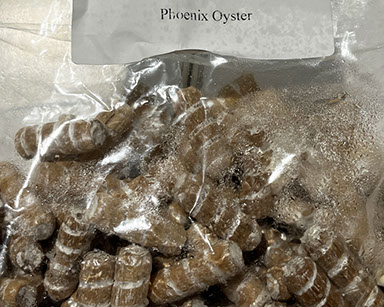
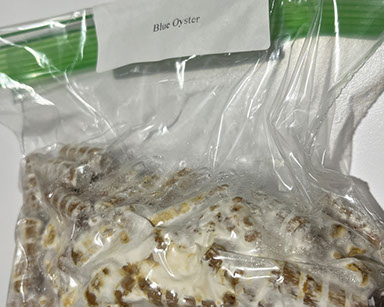
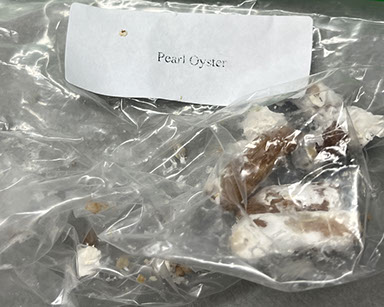
Five strains grown side by side to compare texture and growth.
Substrate is the material the mycelium grows on, usually agricultural waste. It has to be sterilised first so nothing else competes with the mycelium.
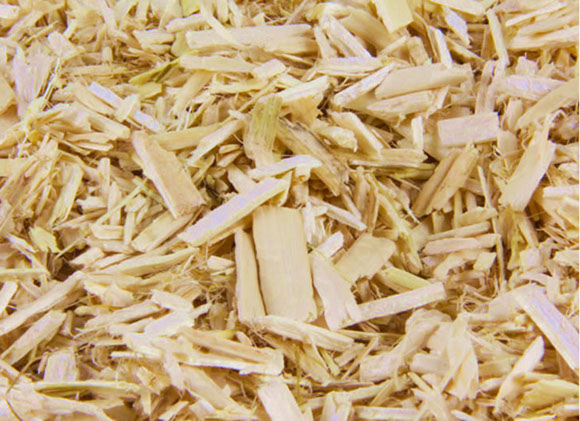
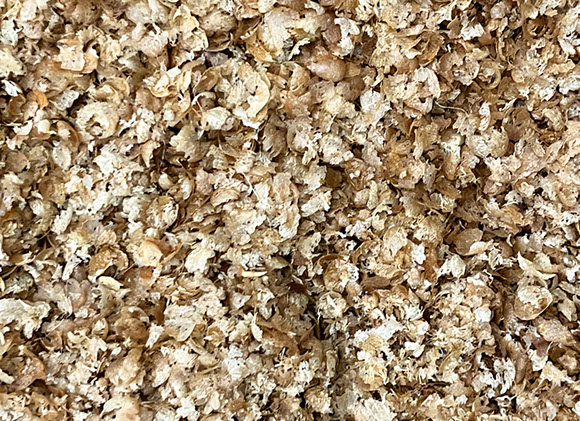
Hemp and coffee husk, the two substrates used in the trials.
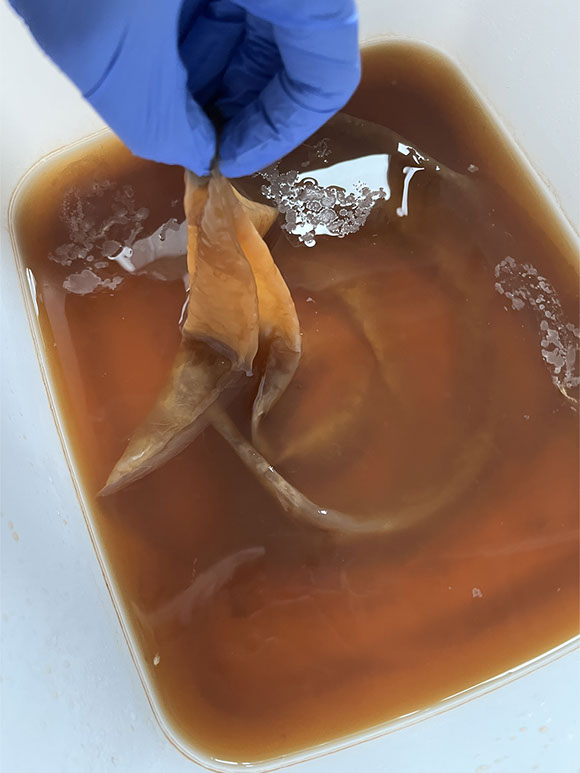
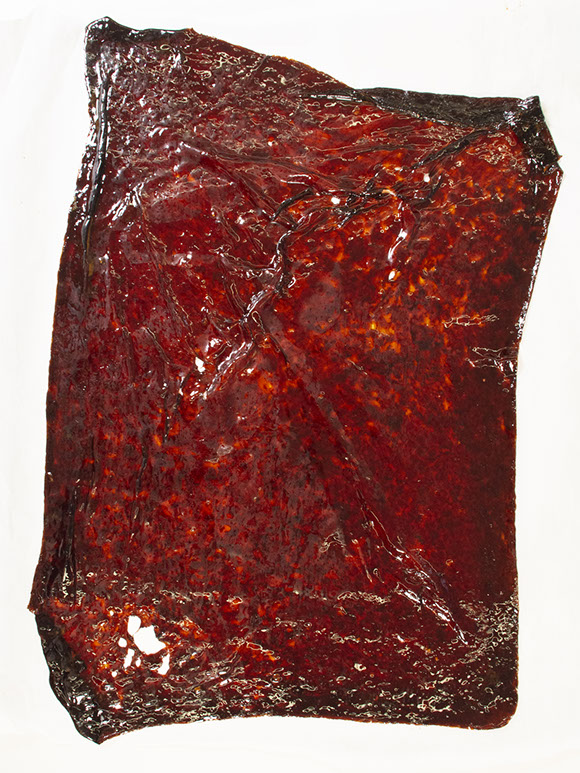
A bacterial cellulose prototype grown alongside the mycelium trials.
quote
“Knowing the goals of plastic replacement, it is time to co-design with mycelium and prototype what this material can do.
interspecies design notes
Have a question about this stage, or want to bring it into a class or an exhibition?
discuss this project